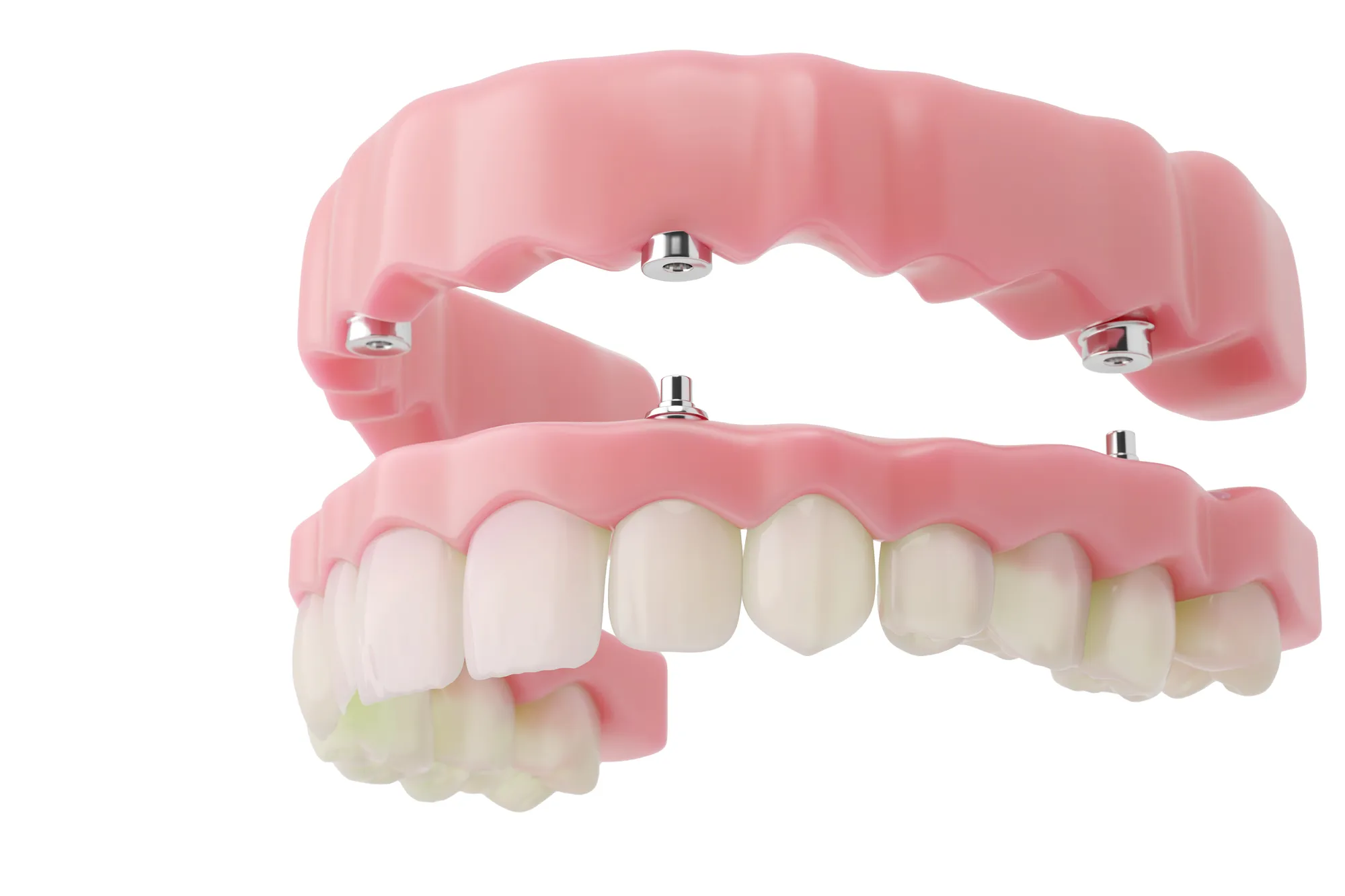
For people with extensive tooth loss, All-on-4 dental implants can provide a fixed alternative to traditional removable dentures. Instead of replacing every missing tooth with an individual implant, this treatment uses strategically positioned implants to support a complete arch of replacement teeth.
One of the most common questions patients ask before choosing this treatment is simple: How long do All-on-4 dental implants last?
There is no single number that applies to every patient. The longevity of an All-on-4 restoration depends on several factors, including oral hygiene, bone health, bite forces, smoking habits, general health, and regular professional maintenance. The dental implants themselves and the replacement teeth are also separate components, so they may have different lifespans.
What Are All-on-4 Dental Implants?
All-on-4 is a full-arch dental implant approach designed to replace most or all teeth in an upper or lower arch. Four strategically positioned implants generally provide support for a connected full-arch restoration when that approach is appropriate for the patient's anatomy.
The implants act as the foundation, while abutments connect the implants to the replacement teeth. Patients may initially receive a provisional restoration while the implants heal. Once healing and implant stability have been evaluated, the final prosthesis can be designed and placed.
Not every patient will have exactly the same implant configuration. Some patients may benefit from a different number or positioning of implants depending on their bone anatomy, bite, restorative requirements, and long-term goals.
How Long Can All-on-4 Implants Last?
The implants can potentially remain functional for many years when they are properly maintained. However, it is important not to treat an implant lifespan as a guarantee.
Several factors influence long-term implant success:
- Oral hygiene
- Regular dental examinations
- Professional implant maintenance
- Gum health
- Bone condition
- Smoking or tobacco use
- Teeth grinding or clenching
- Bite forces
- Overall health
- The quality and condition of the prosthetic teeth
- Following postoperative and maintenance instructions
A patient who maintains excellent oral hygiene and attends recommended appointments may have a better long-term outlook than someone who develops untreated gum inflammation or places excessive force on the restoration.
Do the Implants and Replacement Teeth Last the Same Amount of Time?
No. This distinction is important.
The dental implants are placed into the jawbone and become integrated with the surrounding bone during healing. The replacement teeth attached to those implants are exposed to chewing forces every day.
As a result, the prosthetic teeth may experience wear, chipping, cracking, or other damage even when the underlying implants remain healthy.
This means that replacing or repairing the prosthesis does not necessarily mean that the dental implants have failed.
Regular examinations allow your dentist to check both components separately.
What Can Shorten the Life of All-on-4 Implants?
Poor Oral Hygiene
Although the replacement teeth cannot develop cavities in the same way natural teeth can, the tissues surrounding the implants still require careful cleaning.
Plaque and bacteria can accumulate around implant-supported restorations. If inflammation develops around the implants and is not treated, it can affect the tissues and bone supporting them.
Daily cleaning and professional maintenance are therefore important parts of protecting your investment.
Smoking and Tobacco Use
Tobacco can negatively affect oral tissues and healing. Smoking may also increase the risk of complications around dental implants.
If you are considering All-on-4 treatment and use tobacco, discuss it honestly with your dentist. Your dental team can explain how tobacco may affect healing and long-term implant maintenance.
Teeth Grinding
Clenching and grinding can place substantial pressure on implant-supported teeth.
Some patients grind their teeth during sleep without realizing it. If you have a history of bruxism, your dentist can evaluate your bite and discuss ways to reduce excessive forces on your restoration.
Skipping Maintenance Visits
Implant-supported teeth still require professional care.
Routine appointments allow your dental team to inspect the implants, surrounding tissues, bite, and prosthesis. Small problems can sometimes be addressed before they become more significant.
Poorly Controlled Health Conditions
Certain health conditions can influence healing and oral health. Your dentist should know about your medical history and medications before treatment and during follow-up care.
How Can You Make All-on-4 Implants Last Longer?
Long-term maintenance starts with your daily routine.
1. Follow Your Cleaning Instructions
Your dentist or dental team should show you how to clean around your specific restoration. Depending on the design, your routine may involve specialized brushes, flossing aids, water flossers, or other cleaning tools.
2. Attend Regular Dental Visits
Do not wait until your implants hurt before scheduling an examination. Implant problems can sometimes develop without obvious symptoms.
Regular appointments help your dental team monitor the health of the tissues around the implants and assess the condition of your restoration.
3. Avoid Using Your Teeth as Tools
Do not use your implant-supported teeth to open packages, break hard objects, or perform tasks unrelated to eating.
These habits can create unnecessary stress on the restoration.
4. Address Grinding
If you clench or grind your teeth, tell your dentist. Excessive bite forces can affect the longevity of the prosthesis and may contribute to mechanical complications.
5. Respond to Changes Quickly
Contact your dentist if you notice:
- A loose feeling
- A change in your bite
- Cracks or chips
- Unusual discomfort
- Swelling
- Bleeding around the implants
- Difficulty cleaning the restoration
- Movement in the prosthesis
Early evaluation can help determine whether the issue involves the prosthesis, abutment, implant, or surrounding tissue.
Can All-on-4 Dental Implants Fail?
Implant failure is possible, although the goal of treatment is long-term stability.
Failure can occur for different reasons. An implant may not integrate properly with the bone, or problems can develop later because of infection, excessive forces, bone loss, trauma, or other factors.
A failed restoration does not automatically mean every implant has failed. Your dentist needs to evaluate the specific problem and determine the appropriate solution.
What Happens When the Replacement Teeth Need Repair?
The prosthesis can experience normal wear over time.
Depending on the type of restoration, repairs may involve replacing a component, repairing damage, adjusting the bite, or eventually creating a new prosthesis.
This is another reason to maintain regular appointments. Your dentist can monitor changes in the restoration and recommend maintenance before minor wear becomes a larger problem.
Are All-on-4 Implants Right for You?
All-on-4 treatment may be considered for adults who have lost most or all of their teeth, have multiple failing teeth, or want to explore a fixed alternative to removable dentures.
However, candidacy cannot be determined from symptoms alone. Your dentist needs to evaluate your teeth, gums, jawbone, bite, medical history, and treatment goals.
At NextGen Dental Smiles, treatment planning can include a comprehensive evaluation and 3D CBCT imaging to assess the jaw and determine an appropriate implant strategy.
Maintaining Your Investment
All-on-4 dental implants are not a treatment that you simply complete and forget about. Long-term success depends on what happens after treatment as well.
Good home care, regular professional maintenance, a healthy lifestyle, and prompt attention to changes can all help protect your implants and restoration.
If you are considering full-arch tooth replacement, speak with a qualified dental professional about your individual needs rather than relying on a standard timeline.
Learn More About All-on-4 Dental Implants in Vacaville
If you are considering a fixed solution for extensive tooth loss, NextGen Dental Smiles & Implant Studio provides personalized All-on-4 dental implant consultations in Vacaville, CA. The team evaluates your oral health, bone anatomy, bite, and treatment goals before recommending an approach.
Get Started
Your Smile is Our Priority
Schedule an appointment with us today to discover the difference of advanced, proven technologies, a full suite of services, and exceptional quality in dental care – all tailored to give you a healthier, happier smile.
SCHEDULE TODAY
.svg)
.svg)
.svg)

.svg)

.svg)
.svg)
.svg)

.svg)